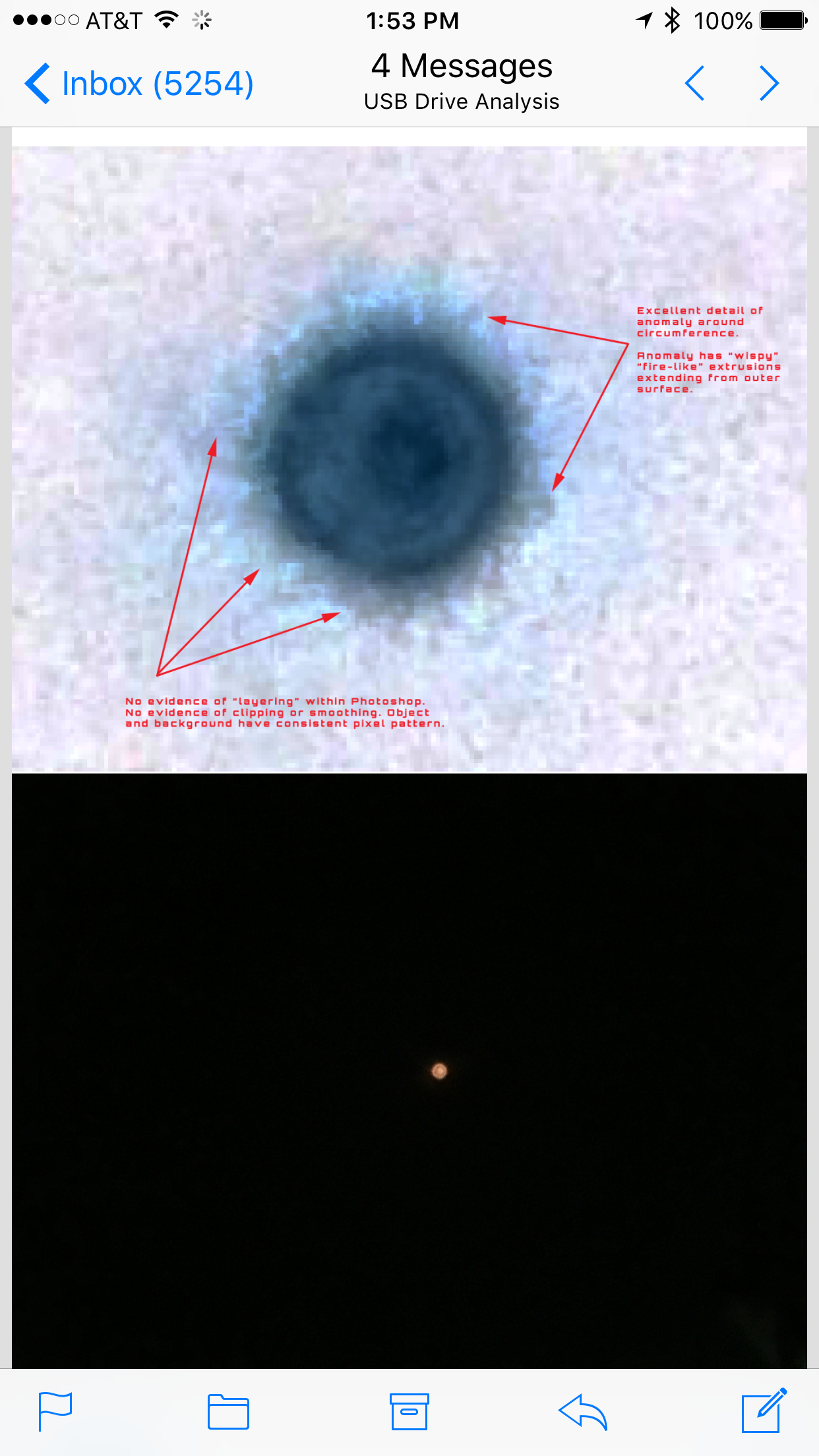
The universe is a vast, ever-expanding mystery, challenging our understanding and pushing the boundaries of human knowledge. Among the most intriguing topics in astronomy and ufology is the nature of Unidentified Flying Objects (UFOs) and the possibility that they might be evidence of extraterrestrial intelligence. The extraterrestrial hypothesis proposes that some UFO sightings are best explained as physical spacecraft belonging to advanced alien civilizations. This article explores the validity of this hypothesis, drawing upon our evolving understanding of the universe, the principles of physics, and the potential for interstellar travel.
Historically, humanity’s grasp of the cosmos has been limited by the technology and theories of the time. Only a few centuries ago, it was believed that our solar system constituted the entire universe. The 20th century brought the discovery of other galaxies beyond our Milky Way, dramatically shifting our perspective. The launch of the James Webb Space Telescope (JWST) in the 21st century further revolutionized our understanding, revealing complex galaxies formed a mere few hundred million years after the Big Bang. These observations suggest that the universe reached a level of complexity much earlier than previously thought, with galaxies over 13 billion years old providing a much larger window for the potential development of life. Such early complexity challenges previous assumptions and suggests a universe ripe for the emergence of life billions of years before Earth formed.
The Earth itself, at approximately 4.5 billion years old, saw the appearance of the first microorganisms about a billion years later. Considering the existence of galaxies over 13 billion years old, it’s plausible that life could have developed elsewhere as early as 12 billion years ago. This vast expanse of time offers a significant window for civilizations to emerge and potentially reach levels of technological advancement far beyond our own.
One of the main scientific hurdles to the idea of interstellar, or even intergalactic, travel is the limitation imposed by the speed of light, as outlined in Albert Einstein’s theory of Special Relativity. This theory suggests that faster-than-light (FTL) travel would require infinite energy and could result in paradoxical scenarios, such as traveling back in time. However, General Relativity, Einstein’s theory of gravitation published in 1915, provides theoretical frameworks that could allow for FTL travel without violating the known laws of physics. Concepts derived from General Relativity, such as negative pressure or energy and the existence of closed timelike curves, hint at the possibility of creating “warp bubbles” or other mechanisms that could enable FTL travel. The Casimir effect, a quantum phenomenon, serves as a real-world example of negative pressure, lending credence to these theories.
If we accept that the laws of physics may not categorically preclude FTL travel, it opens the door to the possibility that an advanced civilization, having had potentially billions of years head start on us, could have mastered this technology. Such a civilization would theoretically have the capability to explore the cosmos, visiting other planets and possibly even our own Earth. This line of reasoning supports the extraterrestrial hypothesis for some UFO sightings, suggesting that what we perceive as unexplainable phenomena could indeed be evidence of visitations by alien spacecraft.
The concept of FTL travel and the associated possibility of time travel often evoke a sense of discomfort and incredulity. The idea that we could potentially traverse vast distances in the blink of an eye or even manipulate the flow of time challenges our fundamental understanding of reality and raises profound philosophical and ethical questions. However, when we delve deeper into the implications of these concepts through the lens of advanced physics, the perplexity surrounding them begins to unravel, revealing a universe far more intriguing and complex than our everyday experiences might suggest.
The discomfort surrounding FTL and time travel primarily stems from our intuitive grasp of time and causality, grounded in the everyday experiences where the past is fixed, and the future is yet to be determined. However, the realm of theoretical physics—especially concepts derived from General Relativity—presents a universe where the fabric of spacetime is much more malleable than our intuitions suggest. Theories proposing mechanisms for FTL travel, such as the creation of “warp bubbles” or traversable wormholes, do not necessarily imply the ability to change past events in a way that creates logical paradoxes. Instead, some interpretations of quantum mechanics and General Relativity suggest that such forms of travel might lead to the creation of alternate timelines or parallel universes, where the paradoxes of time travel are resolved not by altering our known history, but by branching into new, self-consistent histories.
Moreover, the discomfort with these concepts often overlooks the fact that they are based on serious scientific inquiry and mathematical rigor. While the practical realization of FTL travel and time manipulation remains speculative and faces enormous technological and energy-related challenges, their theoretical foundations encourage us to expand our understanding of the universe. They push us to consider the limits of what might be possible in a cosmos that is far stranger and more wonderful than we could have imagined. Rather than viewing these possibilities as unsettling, we can see them as opportunities to explore the very nature of reality, time, and our place in the universe.
In conclusion, the validity of the extraterrestrial hypothesis for UFO sightings is supported by a combination of our expanding understanding of the universe, the theoretical underpinnings of physics, and the potential for technological advancements that could enable interstellar travel. While definitive proof remains elusive, the hypothesis remains a compelling explanation for phenomena that have yet to be fully explained by conventional understanding. As our technology and knowledge continue to advance, we may one day uncover evidence that confirms the existence of extraterrestrial civilizations and their visits to our planet, transforming what is now hypothesis into reality. The universe is vast and ancient, with mysteries waiting to be uncovered, and our pursuit of understanding continues to reveal the endless possibilities that lie beyond our current horizon.
submitted by /u/wannabelikebas
[link] [comments]