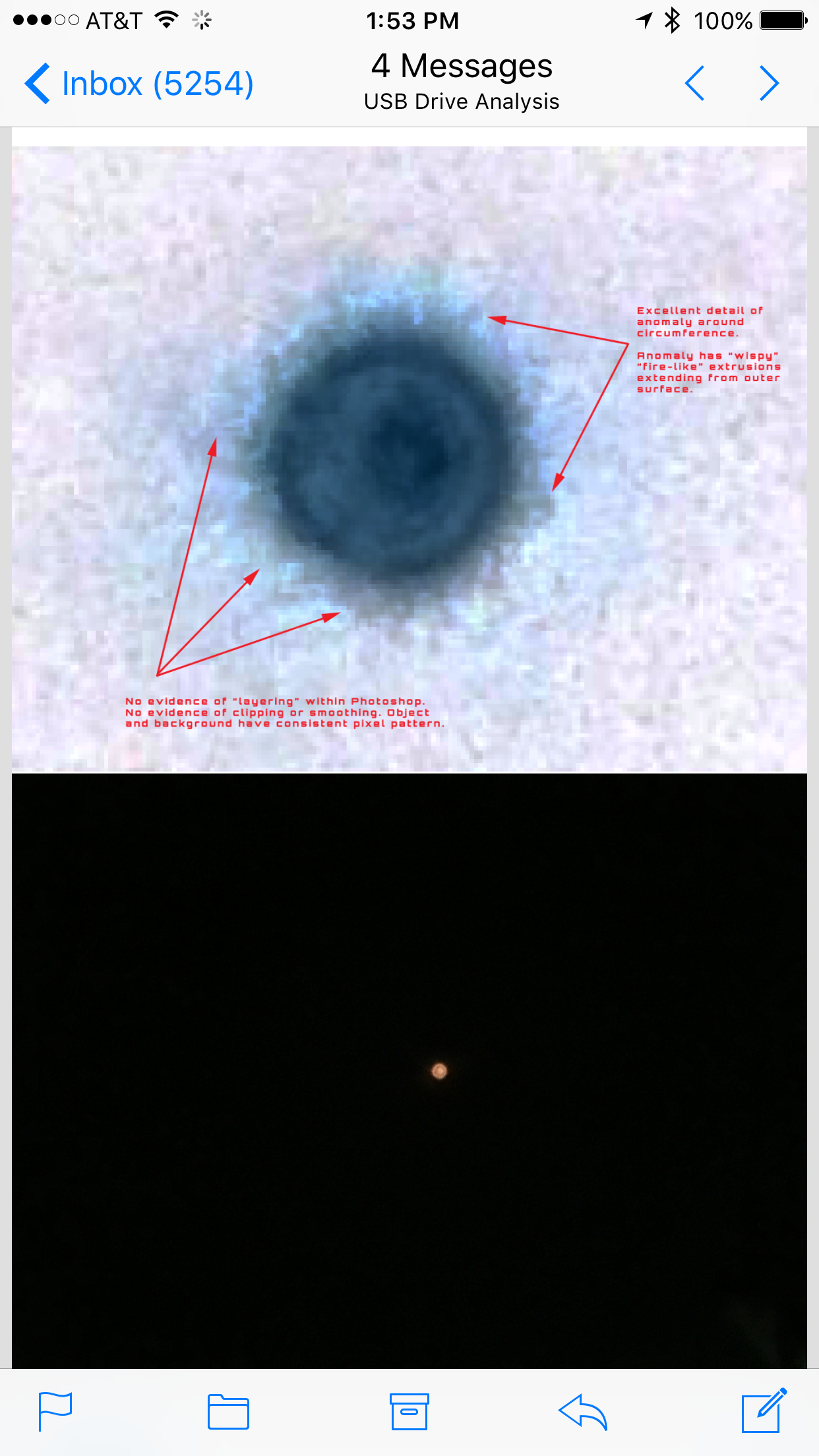
Decided to see what insights Claude AI has on this topic. Honestly blown away with these clear headed and reasonable responses.
Me: There is an air born object about 40ft in diameter that appears to move at incredible speeds by radar, cameras and the naked eye. It moves with no noise and no heat signature. No known human air craft can keep up with it. What are some strategies for collecting more data that may reveal more information about this object?
Claude: When dealing with an unidentified aerial phenomenon (UAP) exhibiting advanced capabilities, it’s crucial to gather as much data as possible to better understand its nature and origins. Here are some strategies for collecting more information:
Radar tracking: Utilize multiple radar systems, including ground-based, airborne, and satellite-based radars, to track the object’s movement, speed, and trajectory from different angles and locations.
Visual documentation: Employ high-resolution cameras, including infrared and thermal imaging cameras, to capture detailed visual data of the object from various locations and angles. This can help determine its shape, size, and any visible features.
Spectral analysis: Use spectrometers to analyze the electromagnetic spectrum emitted or reflected by the object, which may provide insights into its composition, propulsion, or other characteristics.
Acoustic monitoring: Although the object moves with no apparent noise, use sensitive acoustic sensors to detect any subtle sounds or vibrations that may be associated with its movement or presence.
Electromagnetic signal monitoring: Monitor a wide range of electromagnetic frequencies to detect any signals, communications, or anomalies that may be emanating from the object.
Collaborative tracking: Coordinate with other agencies, organizations, or countries to share data and resources in tracking and studying the object, as it may move across different jurisdictions and territories.
Eyewitness interviews: Conduct interviews with any eyewitnesses who have directly observed the object, including pilots, military personnel, or civilians, to gather detailed accounts of their experiences and observations.
Scientific analysis: Engage a multidisciplinary team of scientists and experts, including physicists, engineers, and aerospace specialists, to analyze the collected data and propose hypotheses or explanations for the object’s behavior and characteristics.
Persistent monitoring: Establish a long-term monitoring program to track the object’s appearances, movements, and patterns over an extended period, which may reveal additional insights or trends.
Transparency and collaboration: Foster a culture of transparency and collaboration among relevant agencies and stakeholders to ensure that data is shared, analyzed, and acted upon in a coordinated and timely manner.
It’s important to approach the study of UAPs with an open mind, scientific rigor, and a commitment to evidence-based analysis. By collecting and analyzing a wide range of data from multiple sources and perspectives, we may be able to gain a better understanding of these enigmatic phenomena and their implications for our understanding of physics, technology, and potentially, the presence of non-human intelligence.
Me If after collecting the information using the methods you described, it was found that the object was likely of extra terrestrial origin, why might a government choose to the keep that information a secret instead of revealing the findings?
If the collected data strongly suggests that the unidentified aerial phenomenon is of extraterrestrial origin, a government might choose to keep the information secret for several reasons:
National security concerns: The advanced capabilities displayed by the object, such as incredible speed and stealth, could be perceived as a potential threat to national security. The government may fear that revealing the information could compromise their ability to defend against or study the technology.
Fear of public panic: News of extraterrestrial presence could cause widespread public panic, as it would challenge many fundamental beliefs and assumptions about our place in the universe. The government may worry that such panic could lead to social unrest, economic instability, or other negative consequences.
Lack of full understanding: Despite collecting data, the government may still have limited knowledge about the nature, intentions, and capabilities of the extraterrestrial entities. They may choose to withhold the information until they have a better grasp of the situation and can provide more concrete answers to the public.
Geopolitical advantages: If the government believes they can gain a strategic advantage by secretly studying and potentially replicating the advanced technology, they may choose to keep the information classified to prevent other nations from gaining access to it.
Preservation of power structures: The confirmation of extraterrestrial presence could challenge existing power structures, including religious, political, and economic institutions. Some within the government may fear that revealing the truth could undermine their authority and control.
Diplomatic considerations: If the extraterrestrial presence is confirmed, it would raise complex questions about how to approach diplomacy and international relations with an advanced alien civilization. The government may need time to navigate these uncharted waters before making the information public.
Lack of consensus: There may be disagreements within the government about the interpretation of the data or the best course of action. Some officials may advocate for disclosure, while others may argue for secrecy until a consensus can be reached.
It’s worth noting that while these reasons may explain why a government would choose to keep such information secret, there are also arguments in favor of transparency. Many would argue that the public has a right to know about a discovery of this magnitude and that the scientific and philosophical implications are too significant to keep hidden. Ultimately, the decision to disclose or withhold information would depend on a complex interplay of political, social, and strategic factors, and it would likely be a contentious and debated issue within any government facing such a situation.
Me: How can the people force the government to disclose the findings?
Claude: If the public believes that the government is withholding information about the extraterrestrial origin of an unidentified aerial phenomenon, there are several ways they can try to pressure the government to disclose the findings:
Freedom of Information Act (FOIA) requests: Citizens can file FOIA requests to seek the release of government documents related to the UAP investigation. If the requests are denied, they can file appeals or lawsuits to challenge the decision.
Media pressure: Journalists and media outlets can investigate and report on the government’s secrecy, raising public awareness and putting pressure on officials to be more transparent. Investigative journalism can help uncover leaks, whistleblowers, or inconsistencies in the government’s statements.
Public petitions and demonstrations: Organized public petitions, protests, and demonstrations can show the government that there is significant public demand for disclosure. Large-scale public actions can attract media attention and put political pressure on elected officials.
Congressional or parliamentary inquiries: Citizens can pressure their elected representatives to launch official inquiries or hearings into the government’s handling of the UAP investigation. Representatives can use their political power to demand answers and accountability from government agencies.
Whistleblowers and leaks: Individuals within the government who have access to classified information can choose to become whistleblowers or leak documents to the media or the public. However, this approach is risky and can carry severe legal consequences.
Scientific community pressure: Scientists, academics, and professional organizations can use their credibility and influence to call for transparency and the release of data for independent analysis. They can argue that the scientific implications are too significant to be kept hidden.
International pressure: If the UAP sightings have been observed in multiple countries, citizens can try to coordinate with international organizations or foreign governments to put pressure on their own government to disclose the findings.
Legal action: In some cases, citizens or organizations may be able to file lawsuits against the government to challenge the secrecy and demand the release of information under freedom of information or other transparency laws.
It’s important to note that forcing the government to disclose sensitive information is a complex and challenging process, and success is not guaranteed. Governments have the power to invoke national security concerns or other legal justifications for secrecy, and they may resist public pressure if they believe that disclosure would compromise their interests or responsibilities. Ultimately, the decision to disclose or withhold information would likely be the result of a prolonged and contentious political, legal, and social battle, with competing interests and arguments on both sides.
submitted by /u/REJECT3D
[link] [comments]