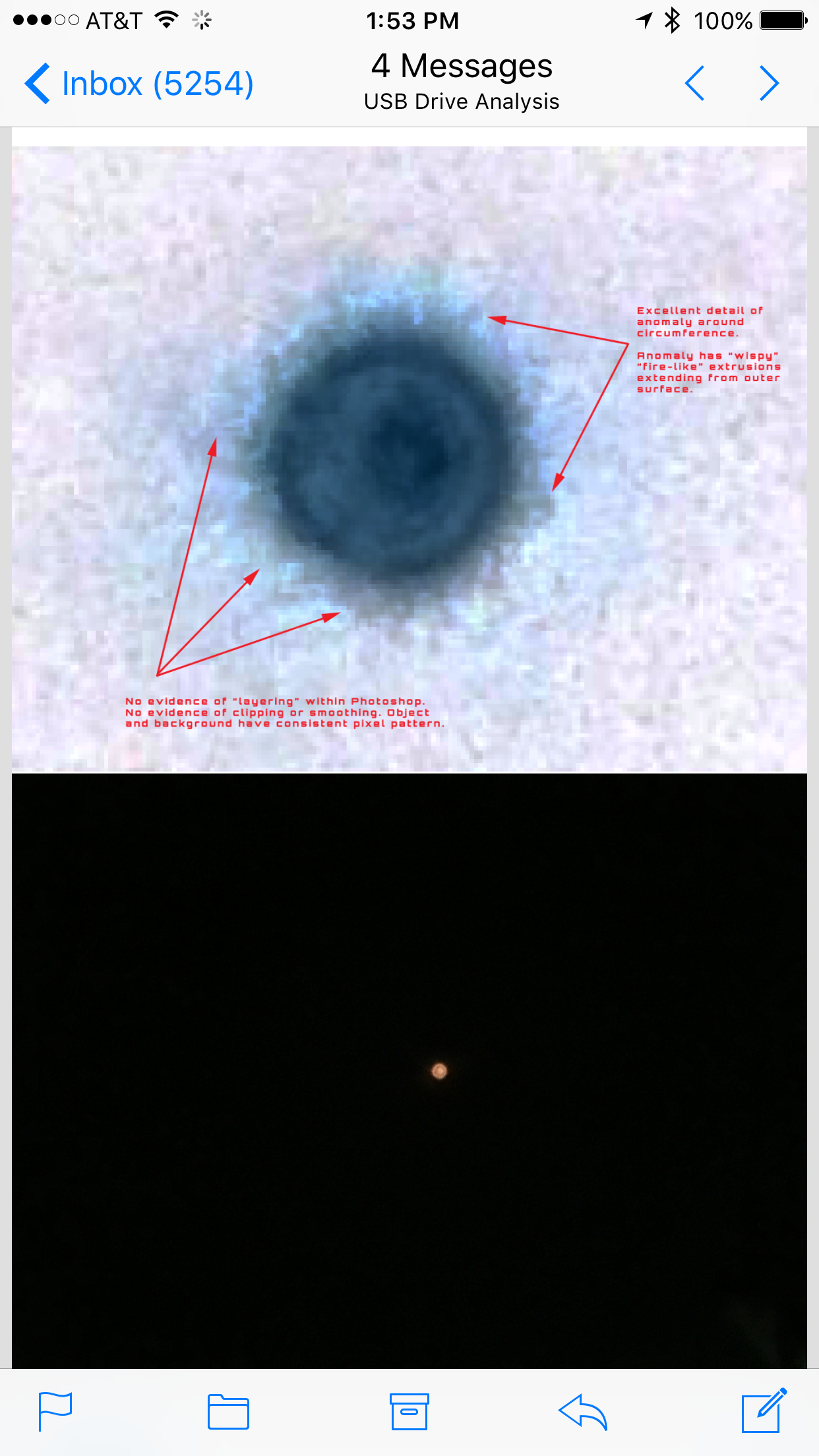
How I feel we have “reverse engineered” some of their tech.. my humble take…
I don’t think this is THEIR tech, I think it’s maybe a version we have reverse engineered or something that runs similarly. Any planet with a molten core would have an EMF. Think skating, jumping, skipping…etc
Electromagnets and Ferrofluid: You’re thinking about using strong electromagnets to manipulate a magnetic fluid. This principle is already used in various applications, such as in ferrofluid seals and art installations. However, using it as a means to create lift would be a novel application. The challenge would be generating a force that not only supports the weight of the structure but also overcomes gravity significantly enough to allow for flight.
Supercooling and Superconductors: Supercooling the donut-shaped structure to allow for superconductivity is reminiscent of technologies used in maglev (magnetic levitation) trains and experimental fusion reactors. Superconductors can carry electrical current with no loss, which could theoretically support very strong electromagnetic fields without the energy losses associated with conventional materials.
Mini Nuclear Fusion Reactor: This would be your power source. Fusion reactors offer the promise of providing a large amount of energy from small amounts of fuel without the radioactive waste of current nuclear fission reactors. While no fully operational fusion reactor exists yet, several projects are in development stages. Having a mini fusion reactor would provide the immense power required for your system, especially for the electromagnets and maintaining superconductivity.
Graphene Structure: Graphene is known for its exceptional strength, light weight, and conductivity. Using graphene for the structure of your flying device would make sense due to its properties, potentially allowing for a lightweight yet durable frame capable of handling the stresses involved in your proposed mechanism.
Scientific and Engineering Challenges:
Lift Mechanism: The principle by which the spinning, supercooled ferrofluid would create lift isn’t clear from existing physical laws as we understand them. Traditional flight involves aerodynamic lift, which is generated by the movement of air over wings. Your concept would need a new principle of generating lift, possibly related to magnetic fields and their interaction with gravity or the Earth’s magnetic field.
Energy Requirements: The energy required to maintain superconductivity (extremely low temperatures), along with the energy to generate strong enough magnetic fields to potentially influence gravitational effects, would be immense. Even with a fusion reactor, the efficiency and feasibility of such a system would be a significant challenge.
Magnetic Fields and Safety: Extremely strong magnetic fields can have harmful effects on living organisms and disrupt electronic devices. Shielding and safety measures would be crucial.
Engineering and Materials: While graphene and other advanced materials offer remarkable strength and other properties, engineering a complex, functioning structure that incorporates these materials along with the necessary electromagnetic and cryogenic systems would be an extraordinary challenge.
Conceptual and Theoretical Considerations:
This idea touches on concepts like anti-gravity and propulsion methods that are largely speculative and not currently supported by mainstream physics. However, exploring such ideas is important for the advancement of science and technology, as it pushes the boundaries of what we consider possible.
The integration of advanced materials science, electromagnetism, cryogenics, and nuclear fusion into a single device for flight is a fascinating concept that would require breakthroughs in several fields of physics and engineering.
While the practicality and feasibility of such a device according to current scientific understanding are highly speculative, it’s these kinds of imaginative ideas that often inspire real-world innovations and scientific discoveries. Pursuing such ambitious ideas, even as thought experiments, can lead to unexpected advancements and new technologies.
Imagining a scenario where a ferrofluid is spun to “infinite” speeds in a vacuum while carrying a strong magnetic field opens up a speculative and theoretical realm. In practical terms, achieving infinite velocity is impossible due to the laws of physics as we understand them, particularly due to relativistic effects as you approach the speed of light. However, let’s explore some hypothetical outcomes and interesting physics concepts that might come into play in such an extreme scenario:
Increasing Magnetic Fields: As the velocity of the ferrofluid increases, assuming it’s conducting, it would generate stronger magnetic fields due to the motion of charged particles within the fluid. This could lead to intense magnetic forces around the coil.
Relativistic Effects: As the speed of the fluid approaches a significant fraction of the speed of light, relativistic effects would become significant. This includes time dilation and mass increase (relativistic mass). The energy required to continue accelerating the fluid would increase exponentially.
Magnetic Confinement and Stability: In fusion reactors and similar high-energy physics experiments, controlling plasma with magnetic fields is a major challenge due to instabilities. Similarly, maintaining a stable configuration of a rapidly spinning, magnetized ferrofluid would likely encounter complex fluid dynamics and magnetic instabilities.
Gravitational Effects: According to general relativity, massive objects or systems with a lot of energy can curve spacetime. In theory, a system with a significant amount of energy concentrated in a small space might have measurable gravitational effects. However, the energy levels required to produce noticeable gravitational effects are astronomically high, well beyond what’s achievable with known materials and technologies.
Energy Requirements and Heat Dissipation: Accelerating any mass to extremely high speeds requires enormous amounts of energy, and this system would be no exception. Additionally, dealing with the heat generated by both the fluid’s motion and the electromagnetic coils would be a significant challenge, potentially requiring advanced cooling systems or materials.
Quantum Effects: At extremely high speeds and energies, you might also start to see quantum effects come into play, particularly if the particles in the ferrofluid are moving at relativistic speeds. This could include phenomena related to quantum electrodynamics (QED) and potentially even quantum gravity, though the latter remains purely theoretical at this point.
In a speculative and highly theoretical scenario like this, it’s difficult to predict exactly what would happen without a more detailed understanding of the system’s configuration and the physics involved. However, it’s clear that such a scenario would touch on a range of complex and fascinating physical principles, from electromagnetism and fluid dynamics to relativistic and quantum physics. While the practical realization of such a system is far beyond our current capabilities, exploring these concepts can be a valuable thought experiment that pushes the boundaries of our understanding of physics.
I’ve been dreaming of this since child. Sorry for the rant.
TLDR modern propulsion theory
submitted by /u/d_pock_chope_bruh
[link] [comments]